
Transcranial Magnetic Stimulation (TMS):
What Is rTMS? Transcranial Magnetic Stimulation Explained — Treatment, Effects & Outlook
Repetitive transcranial magnetic stimulation (rTMS) is a modern, non-invasive treatment that uses magnetic pulses to influence neuronal activity in targeted brain regions. rTMS therapy is widely regarded as a well-tolerated, drug-free option, particularly for depression, OCD, chronic pain, and post-traumatic stress reactions. In the United States, rTMS holds FDA clearance for several indications, including treatment-resistant depression, OCD, anxious depression, and smoking cessation.
A magnetic coil placed over the head generates short electromagnetic pulses that pass through the skull and stimulate selected cortical areas. This electrical modulation reshapes neuronal networks and drives long-term structural change in the brain, a process known as neuroplasticity.
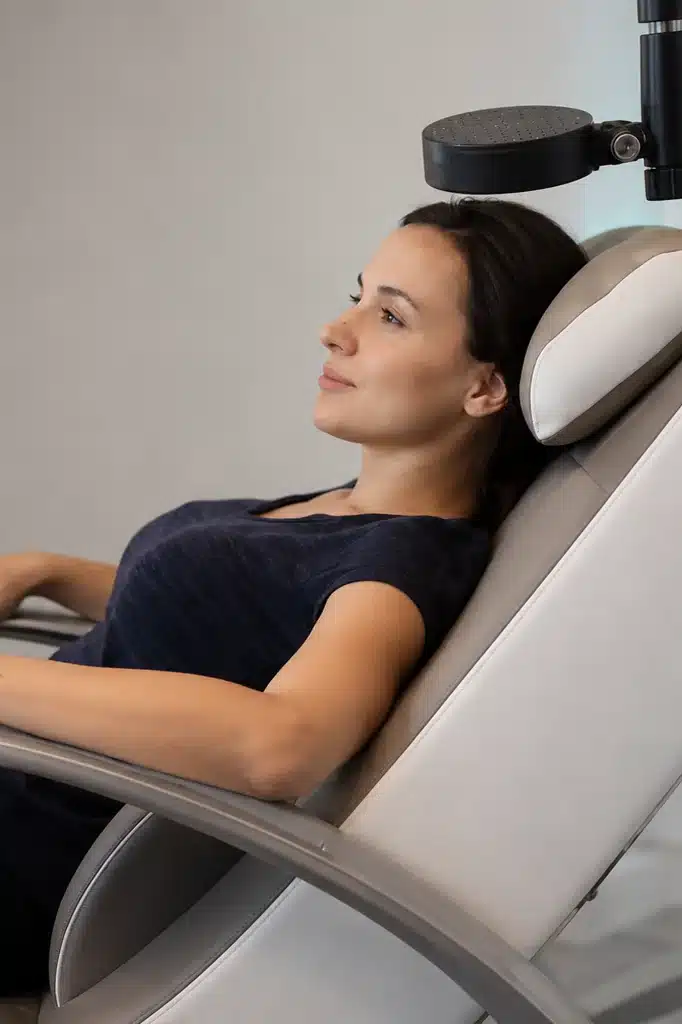
How Does Transcranial Magnetic Stimulation (rTMS) Work?
The effect of rTMS is based on the principle of electromagnetic induction. When current flows through a copper coil, it generates a magnetic field, which in turn induces weak electrical fields inside the brain. These fields modulate the activity of the underlying neurons. The principle behind TMS therapy is straightforward: targeted magnetic pulses can adjust how brain regions communicate with each other.
Depending on the stimulation frequency, rTMS can either inhibit (for example, overactive anxiety networks) or activate (for example, underactive frontal regions in depression) cortical areas. The method is well tolerated, carries a low risk profile, and is designed to help restore disrupted brain functions.

Who Is rTMS Therapy For?
Repetitive transcranial magnetic stimulation is best established for treatment-resistant depression, where it is FDA-cleared in the U.S. and supported by a strong body of clinical research. rTMS for depression is widely recognized as an evidence-based alternative or complement to medication. Studies and clinical experience also support its use for:
- Anxiety disorders, including generalized and social anxiety
- Chronic pain (e.g., fibromyalgia, migraine)
- PTSD (post-traumatic stress disorder)
- Tinnitus, fatigue, and sleep disorders
- Post-COVID syndrome
rTMS may also be considered in an off-label context for psychogenic movement disorders, autonomic imbalance, or emotional trauma, always under medical supervision and based on individual assessment.
What Does an rTMS Treatment Look Like? - neo TMS® explained
The rTMS treatment process at Neuro-Spa Group is standardized through our proprietary neo TMS® analysis algorithm and supervised by Prof. h. c.* Dr. med.** O. Seemann, chief physician of the Neuro-Spa Group. Every treatment plan starts with QEEG brain mapping, which makes individual brain activity measurable and informs the choice of target region and protocol.
Patients sit comfortably while the coil is positioned over the target region. A single session typically lasts between 4 and 30 minutes, depending on the protocol. The pulses produce a soft tapping or twitching sensation but are not painful. Pulse monitoring throughout each session tracks stimulator output, frequency, train duration, and inter-train intervals in real time, keeping every parameter within established safety standards. A standard course usually involves 10 to 20 sessions over several weeks. Intensive programs such as the One-Day Treatment, with multiple sessions per day, can significantly shorten the overall treatment duration.

Side Effects and Risks of rTMS Therapy
rTMS side effects are typically mild and short-lived:
- Mild headache or a feeling of pressure at the forehead
- Tiredness, reduced concentration
- Rarely: brief mood fluctuations
TMS contraindications include:
- Metal objects in the head or brain near the coil
- Certain pacemakers, cochlear implants, or other active implanted devices
How Can the Effects of rTMS Be Enhanced?
Several approaches can act as an rTMS booster and further support neuroplasticity:
- D-Cycloserine, Dextromethorphan, Nitrous oxide, Esketamine or Ketamine and stimulants (e.g..Lisdexamfetamine) as neuro-enhancers (off-label)
- Nutrient therapy: we provide specific, individualized recommendations
- Cognitive activation: learning, exercise, music
- Intensified protocols, such as SAINT 2.0 or theta-burst stimulation
- neo TMS — our proprietary analysis algorithm for personalized protocols
These approaches are combined and tailored to each patient.
Functional Diagnostics for Personalized rTMS — EEG, QEEG & Pulse Monitoring
To plan rTMS therapy precisely, we combine multiple modern diagnostic methods:
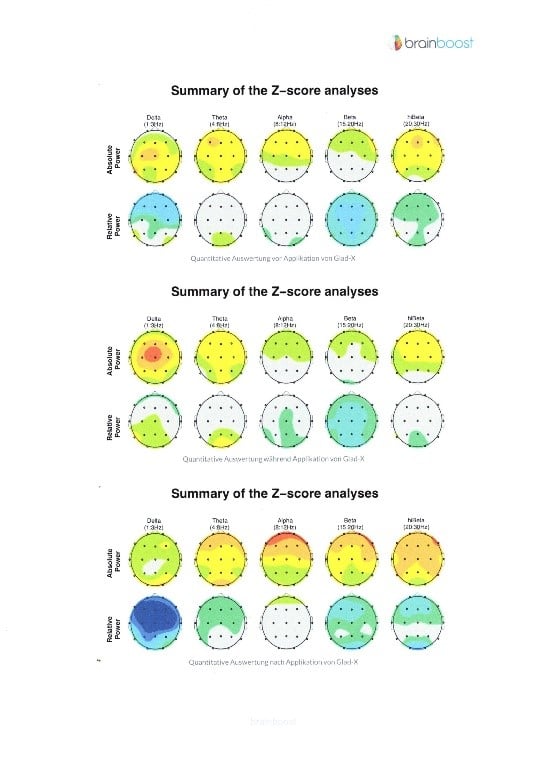
- QEEG (quantitative EEG – brainmapping): The electroencephalogram, and especially its quantitative form, QEEG, maps over- and underactivity in specific cortical regions and forms the foundation for individualized rTMS protocols.
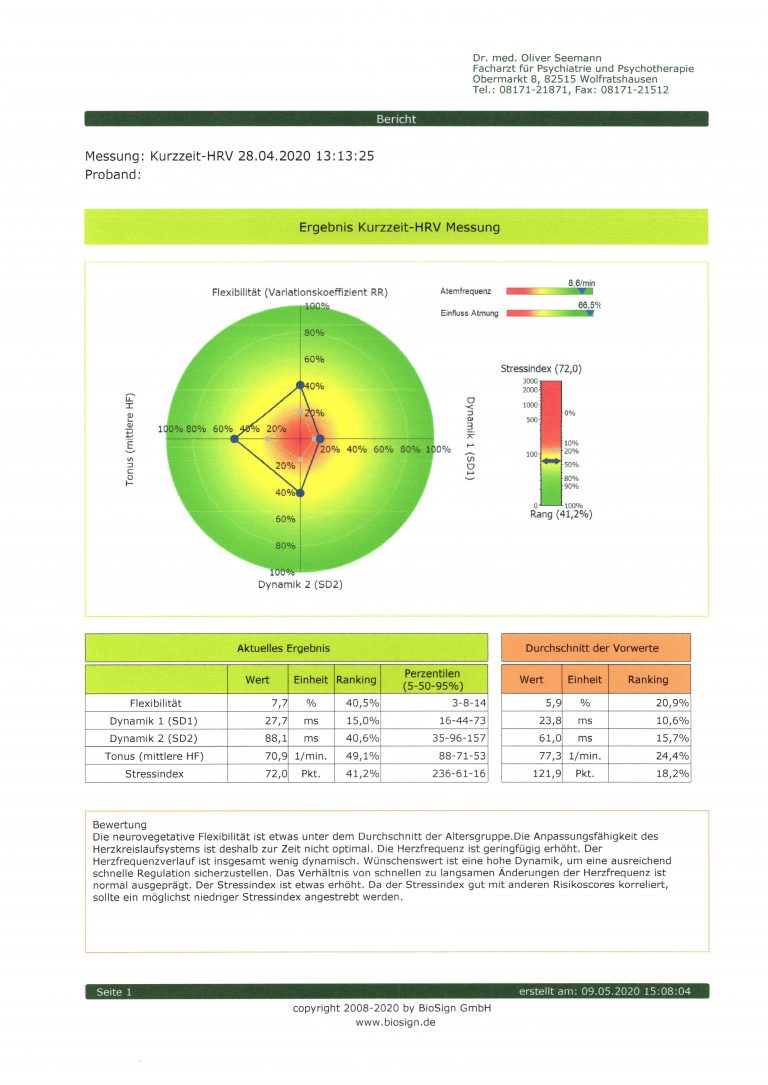
- HRV analysis: Heart rate variability reflects the state of the autonomic nervous system and helps gauge stress load and recovery capacity.
- Pulse monitoring: Continuous pulse monitoring during stimulation tracks both biological responses (e.g., heart rate) and technical delivery parameters in real time.
- neo TMS® algorithm software: Processes QEEG data and derives personalized treatment protocols.
Combining QEEG diagnostics, HRV analysis, and pulse monitoring enables precise, effective, and reproducible rTMS treatment and clearly distinguishes a modern protocol from generic stimulation.
Quantitativen Elektro Enzephalogramm (QEEG) :
Die Messung der Herzraten Variabilität (HRV):
Does rTMS Influence DNA, Gene Expression and VEGF?
Yes — research indicates that rTMS influences gene expression and molecular regulation in the brain:
- Activates immediate-early genes (e.g., c-Fos, Arc)
- Alters DNA methylation at stress-related genes
- Drives epigenetic modulation, including histone acetylation
- Upregulates VEGF (vascular endothelial growth factor), a key signaling molecule for angiogenesis and neuroplasticity
The role of VEGF is particularly noteworthy: VEGF supports the formation of new blood vessels and is closely linked to neuronal survival, regeneration, and adaptive remodeling. Together, these molecular effects appear to underlie processes of adaptation, resilience, and neuronal reorganization and they inform the development of rTMS as a precision-biological therapy.
rTMS and Stem Cells — New Horizons in Neuroregeneration
Preclinical studies show that rTMS:
- Stimulates endogenous neural progenitor cells
- Promotes stem-cell growth, particularly in the hippocampus and dentate gyrus
- Acts in part through VEGF-mediated pathways that support tissue regeneration and angiogenesis
- May open new long-term treatment options when combined with stem-cell-based approaches
The intersection of rTMS, VEGF biology, and regenerative medicine is one of the most promising frontiers in modern neuroscience.
Frequently Asked Questions About rTMS Therapy
What is the difference between TMS and rTMS?
TMS (transcranial magnetic stimulation) is the general term for non-invasive brain stimulation using magnetic pulses. rTMS, repetitive transcranial magnetic stimulation, is the clinically applied form, in which pulses are delivered in repeated sequences to produce lasting neuroplastic effects. When people refer to “TMS therapy” in a clinical context, they almost always mean rTMS.
What does an rTMS treatment cost?
rTMS treatment costs vary depending on intensity, diagnostic workup (including EEG/QEEG), and protocol. In our practices, treatment series typically start from CHF 3236,-. You will receive a transparent cost estimate during your initial consultation.
Is rTMS covered by insurance?
In the U.S., rTMS for FDA-cleared indications, such as treatment-resistant depression, is often covered by private insurance. At our Zurich location and partner practices, coverage depends on the indication and the insurance type (supplementary Insurance). The treatment is not yet covered by OKP in Switzerland. In Germany, private insurances/Beihilfe are obliged to cover the costs in treatment resistant severe depression.
What experiences do patients report?
Patients commonly describe improved mood, more energy, better sleep, and a stronger sense of inner calm. Outcomes always depend on the indication, the chosen protocol, and individual factors.
How long does rTMS therapy take?
Standard programs run 3 to 5 weeks. Intensive protocols can compress treatment into just 1 to 5 days. The right format depends on the indication, the patient’s situation, and EEG-based findings.
Why is QEEG important for rTMS?
The more sophisticated EEG – the so-called QEEG (quantitative EEG), reveals dysregulated activity patterns in cortical regions. This makes it possible to select the right stimulation site, frequency, and protocol. QEEG-guided rTMS is the foundation of truly personalized brain stimulation in daily good clinical practice.
What is pulse monitoring during rTMS?
Pulse monitoring continuously tracks how magnetic pulses are delivered and how the body responds. It covers stimulator output, frequency, and physiological parameters such as heart rate. Pulse monitoring is part of modern safety standards and helps ensure a consistent, reproducible experience throughout each session and across the full treatment series.
What is VEGF, and why is it relevant for rTMS?
VEGF stands for vascular endothelial growth factor. It is a signaling molecule that promotes the formation of new blood vessels and supports neuronal survival as well as neuroplasticity. Some studies indicate that rTMS can increase VEGF expression, one of several molecular mechanisms that may help explain its long-term effects on brain function and regeneration.
Are there specialized rTMS clinics?
Yes — specialized rTMS clinics exist in many cities worldwide. The Neuro-Spa Group treats patients on an outpatient basis at our private practice in Zurich and at our specialized partner practices.
Conclusion & Contact
rTMS is an effective, gentle, and highly personalizable therapy, relevant far beyond depression. With precision diagnostics (EEG/ QEEG), individualized protocols (neo TMS®), continuous pulse monitoring, and the molecular foundation provided by mechanisms such as VEGF, the chances of success with rTMS can be substantially improved.
Schedule your initial rTMS consultation or EEG appointment today. We look forward to advising you personally.
Learn more about the Neuro-Spa Group!
Arrange an initial consultation
The initial consultation is a free phone call, Monday to Thursday between 17:00 and 19:00. We go through your situation and the question of whether rTMS is a sensible next step for you. If you would rather not call, you can book an appointment directly instead.
Treatment takes place at our main practice in Zurich or at a partner practice of the Neuro-Spa Group: in Germany, among others in Munich and Schwäbisch Hall, with further practices internationally. If you would rather go to a partner practice, please contact it directly – all addresses and phone numbers are listed in the location overview.